
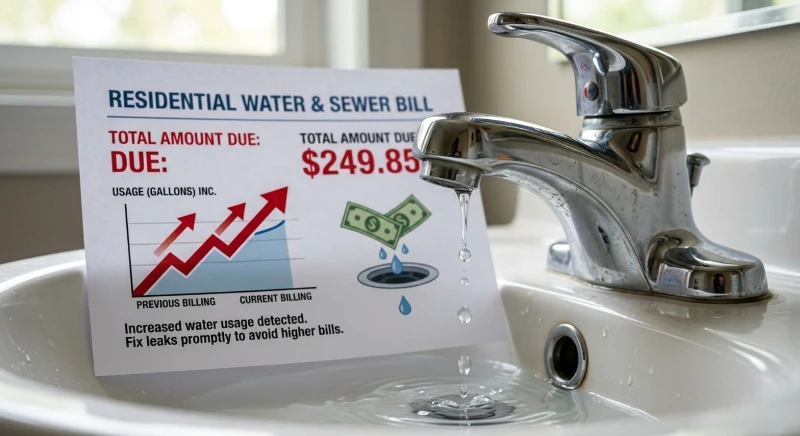
Why Does My Water Bill Keep Skyrocketing?
Has your water bill crept up month after month — even though your habits haven’t changed? You’re not alone. Millions of homeowners open their utility statements in disbelief, wondering where all that water is actually going. The truth is, a rising water bill is rarely random. More often than not, it’s a signal that something in your home’s plumbing system is quietly working against you.
In this guide, we’ll walk through the most common plumbing-related reasons your water bill keeps climbing — and exactly what you can do about each one.
- The true cost of household water waste
- The 7 biggest culprits behind a high water bill
- How to check if you have a hidden leak
- DIY fixes vs. when to call a plumber
- Preventive maintenance that keeps bills low
The True Cost of Household Water Waste
Before blaming your family’s habits, consider this: the Environmental Protection Agency estimates that the average American household leaks more than 10,000 gallons of water per year — and 10% of homes waste 90 gallons or more every single day. That’s not a lifestyle problem. That’s a plumbing problem.
The frustrating part? Most of this waste is completely invisible. It’s not a flooded basement or a burst pipe — it’s a slow drip behind a wall, a flapper that doesn’t quite seal, or a pressure issue that makes your fixtures work twice as hard as they need to.
Check your water meter before bed and again in the morning without using any water overnight. If the reading changed, you almost certainly have a hidden plumbing leak.
The 7 Biggest Culprits Behind a High Water Bill
Here are the most common plumbing issues responsible for unexpectedly high water bills, ranked by how frequently they occur in American homes.
-
1
Running toilet. A toilet that runs constantly can waste 200 gallons per day — that’s over 6,000 gallons a month from a single fixture. The culprit is usually a worn flapper valve or a misaligned float, both of which cost under $10 to fix.
-
2
Leaking faucets and fixtures. A faucet dripping once per second wastes about 3,000 gallons per year. Multiply that by multiple fixtures and the numbers compound fast. Worn washers and O-rings are usually to blame.
-
3
Hidden pipe leaks. Pipes behind walls, under slabs, or in crawl spaces can leak silently for months. These are the most dangerous — not just for your bill, but for structural damage and mold growth.
-
4
Inefficient irrigation systems. Outdoor watering accounts for 30% of home water use on average, and sprinkler systems with broken heads or poor scheduling can double that. Check heads seasonally and install smart controllers.
-
5
Faulty water softener. A malfunctioning water softener stuck in a continuous regeneration cycle can dump hundreds of gallons of water per day down the drain — silently and on its own.
-
6
Old or low-efficiency fixtures. Toilets manufactured before 1994 use up to 7 gallons per flush. Modern WaterSense-certified models use 1.28 gallons. The savings over a year are dramatic.
-
7
Pressure regulator failure. When your home’s pressure reducing valve fails, water pressure can spike, forcing water through your entire plumbing system at a much higher rate — driving up usage without any obvious sign.
How to Check If You Have a Hidden Leak
Before calling a plumber, do this simple 3-step test to confirm whether your high bill is caused by a hidden plumbing leak:
- Step 1 — Meter test: Locate your water meter (usually near the street or at the property line). Note the current reading, then avoid using any water for 1–2 hours. If the reading changes, water is leaving your system somewhere.
- Step 2 — Toilet dye test: Place a dye tablet or a few drops of food coloring in the toilet tank (not the bowl). Wait 15 minutes without flushing. If color appears in the bowl, your flapper is leaking.
- Step 3 — Shutoff test: Turn off the main shutoff valve that feeds your home’s interior plumbing. Check the meter again. If it continues to move, the leak is between the meter and your home — which is typically the utility’s responsibility.
If your meter test confirms a leak but you can’t locate the source, don’t wait. A licensed plumber with a moisture meter or acoustic leak detection equipment can pinpoint hidden leaks without tearing open walls unnecessarily.
DIY Fixes vs. When to Call a Plumber
Not every plumbing issue requires a professional visit. Here’s an honest breakdown of what most homeowners can handle themselves versus what warrants a licensed plumber.
- Replacing a toilet flapper
- Fixing a dripping faucet
- Adjusting float ball height
- Cleaning aerators & showerheads
- Replacing a showerhead
- Insulating exposed pipes
- Leaks inside walls or under slabs
- Pressure regulator replacement
- Water main issues
- Water heater repair or replacement
- Any gas line adjacent work
- Persistent or unknown leak source
The general rule: if the fix requires turning off the main water supply and involves supply lines, valves, or pipes inside finished walls — get a professional. Mistakes can escalate a $200 repair into a $5,000 restoration project.
Preventive Plumbing Maintenance That Keeps Bills Low
The cheapest leak is one that never happens. Here’s a seasonal maintenance routine that protects your plumbing system and your budget year-round.
Monthly
- Check under all sinks for moisture, staining, or odor
- Listen for any running water sounds when all fixtures are off
- Check your water meter reading for unexplained spikes
Every 6 months
- Test all toilet flappers with the dye method
- Clean faucet aerators and showerhead filters
- Inspect water heater for rust, sediment, or pressure relief valve issues
- Check irrigation system heads and scheduling before the season starts
Annually
- Flush your water heater tank to remove sediment buildup
- Have a licensed plumber inspect your pressure regulator and main shutoff valve
- Check exposed pipes in unconditioned spaces (crawl spaces, garages) for damage or mineral buildup
- Review your annual water usage history via your utility provider’s online portal
Most serious plumbing failures give warning signs months before they become emergencies. Slow drains, discolored water, unusual sounds, and unexplained bill increases are all early signals worth acting on immediately.
Still not sure what’s driving your bill up?
A licensed plumber can perform a full home plumbing audit in under two hours — and often pays for itself in the first month of savings.
Get help finding a plumber ↗