Choosing a new water heater is one of the most important decisions a homeowner can make regarding long-term comfort and utility costs. While the traditional storage tank has been the industry standard for decades, tankless technology has surged in popularity due to its efficiency and space-saving design.
But how do you know which one actually fits your lifestyle? Here is a breakdown of the differences, along with the pros and cons of each system.
Traditional Tank Water Heaters
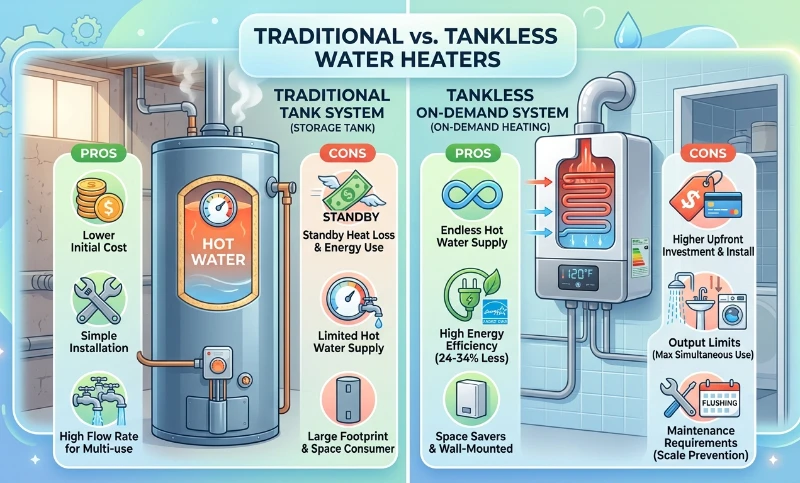
Traditional water heaters work by keeping a large volume of water (usually 30 to 50 gallons) heated in a terminal tank 24/7. When you turn on a faucet, hot water is pulled from the top of the tank.
Pros:
- Lower Initial Cost: The upfront purchase and installation price is significantly lower than tankless options.
- Simple Installation: Because the infrastructure is already in place in most homes, replacing an old tank with a new one is a straightforward process.
- High Flow Rate: A large tank can often handle multiple showers running simultaneously until the stored hot water is depleted.
Cons:
- Standby Heat Loss: Since the tank stays hot even when you aren’t using water, it consumes energy “just in case,” leading to higher utility bills.
- Limited Supply: Once the tank is empty, you must wait for the system to reheat a fresh batch of water.
- Large Footprint: These units take up significant floor space in closets, garages, or basements.
Tankless Water Heaters
Often called “on-demand” water heaters, these units use high-powered burners or electric elements to heat water instantly as it flows through the device. There is no storage tank involved.
Pros:
- Endless Hot Water: Since the water is heated on demand, you will never run out of hot water in the middle of a shower.
- Energy Efficiency: These units only operate when a faucet is turned on, which can reduce energy consumption by 24% to 34% compared to traditional tanks.
- Space Savers: Tankless units are roughly the size of a small suitcase and are usually mounted on a wall, freeing up valuable floor space.
Cons:
- Higher Upfront Investment: The units themselves are more expensive, and the installation often requires specialized venting or gas line upgrades.
- Output Limits: While the water is “endless,” the volume is limited. Running a dishwasher, a washing machine, and two showers at once may overwhelm a single unit’s flow rate.
- Maintenance Requirements: To prevent scale buildup (especially in areas with hard water), tankless systems typically require annual flushing by a professional.
The Verdict
If you are looking for the most budget-friendly immediate replacement, a traditional tank is likely your best bet. However, if you plan on staying in your home long-term and value lower monthly bills and never running out of hot water, tankless is a superior investment.
Whether you’re dealing with a sudden leak or planning an upgrade, consulting with a professional technician ensures your home stays comfortable and efficient for years to come.
If you need help with choosing the right water heater for your home call Broken Arrow Plumbing Pro and we will be more than happy to help you with your decision.