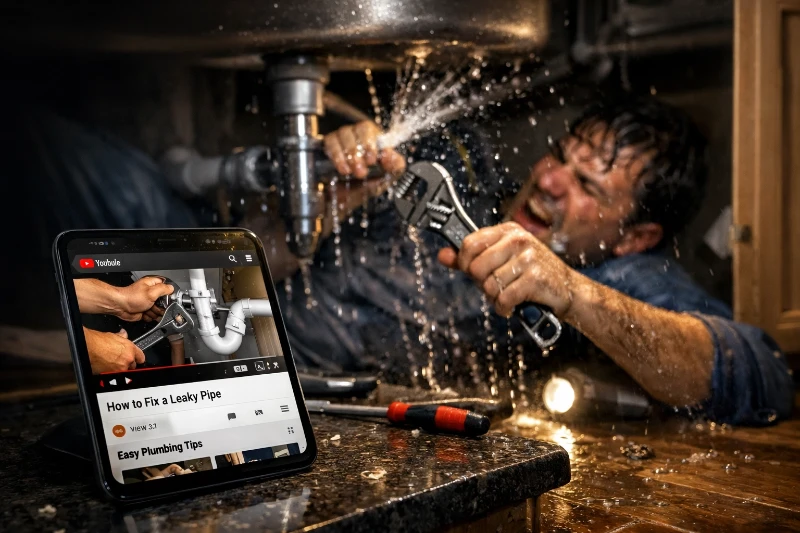
In an era where a solution to almost any household problem seems to be just a YouTube search away, the allure of do-it-yourself (DIY) plumbing has never been stronger. Homeowners, armed with a smartphone and a can-do attitude, are increasingly tackling everything from leaky faucets to burst pipes. While the spirit of self-reliance is commendable, a growing body of evidence suggests that this trend, heavily influenced by online tutorials, is inadvertently leading to more emergency plumbing situations rather than preventing them.
The Allure and the Illusion of the Quick Fix
The promise of saving money and the immediate gratification of a “quick fix” are powerful motivators. A homeowner might watch a four-minute video on replacing a shower valve and assume the task is straightforward. However, these tutorials often present a sanitized version of reality. They rarely account for the unique variables of an individual home, such as the age of the pipes, the specific local building codes, or the hidden complications that can arise once a wall is opened.
This phenomenon, sometimes referred to as the “YouTube Effect,” creates a false sense of security. Viewers are guided step-by-step through a successful repair, but they are seldom taught how to troubleshoot when things go wrong. Consequently, what begins as a minor weekend project can rapidly escalate into a major disaster. According to industry surveys, a staggering 63% of homeowners have regretted at least one DIY project, often citing cost overruns and the sheer complexity of the task once initiated .
The High Cost of “Saving Money”
The financial paradox of DIY plumbing is perhaps its most significant pitfall. The initial motivation is almost always to avoid the cost of hiring a professional plumber. Yet, the reality is that a botched DIY attempt often results in a bill that far exceeds the original estimate for a professional repair.
Consider the most common DIY plumbing mistake: overtightening connections. In an effort to ensure a seal is secure, homeowners frequently apply too much force, cracking fittings or stripping threads. This might not cause an immediate leak, but it creates a weak point that will inevitably fail, often catastrophically, down the line . When that failure occurs, it is rarely during convenient business hours.
Furthermore, the damage extends beyond the plumbing itself. A slow, hidden leak caused by an improperly installed wax ring on a toilet can rot subflooring and joists over months, leading to thousands of dollars in structural repairs and mold remediation. In fact, burst pipes and severe leaks account for approximately 37% of all plumbing emergencies, many of which are exacerbated by prior, inadequate DIY repairs .
The Professional Perspective: Fixing the Fixes
For professional plumbers, the rise of DIY tutorials has fundamentally shifted the nature of their work. While they might appreciate a homeowner’s initiative, the reality on the ground is stark. It is estimated that nearly one-third of all call-outs for tradespeople are now dedicated to fixing failed DIY attempts .
Plumbers frequently encounter situations where a homeowner has mixed incompatible materials, such as connecting copper pipes directly to galvanized steel without a dielectric union. This mistake accelerates galvanic corrosion, leading to rapid pipe failure . Similarly, the overuse of harsh chemical drain cleaners—often the first line of defense for a DIYer facing a clog—can eat through older metal pipes or soften PVC, turning a simple blockage into a need for complete pipe replacement.
“I’ve seen some DIY plumbing that made me smile—and some that made me want to throw a wrench. The problem isn’t that people want to learn; it’s that they don’t know what they don’t know until the water won’t stop.” — A common sentiment among service plumbers regarding the YouTube DIY trend.
The Hidden Dangers: Code Violations and Insurance Nightmares
Beyond the immediate physical damage, DIY plumbing carries significant legal and financial risks that are rarely mentioned in online tutorials. Plumbing codes exist to protect public health and safety, ensuring that drinking water is not contaminated by wastewater and that sewer gases are properly vented.
When a homeowner undertakes a significant plumbing project without the necessary permits or knowledge of local codes, they risk creating hazardous conditions. Improperly sloped drain lines can lead to chronic backups, while incorrect venting can allow toxic gases into the home.
Moreover, these unpermitted modifications can have severe financial repercussions. Many homeowners are unaware that their insurance policies may not cover water damage resulting from unlicensed plumbing work. If a DIY repair fails and floods a home, the homeowner could be left entirely responsible for the cost of restoration. Additionally, non-compliant plumbing can significantly complicate or even derail the sale of a property when discovered during a home inspection.
Knowing When to Put the Wrench Down
The intention behind DIY plumbing is rarely malicious; it is born from a desire to be capable and frugal. However, the complexity of modern plumbing systems demands a level of expertise that cannot be acquired from a brief video tutorial.
While minor tasks like replacing a showerhead or unclogging a superficial drain might be within the purview of a careful homeowner, anything involving the alteration of pipes, the installation of major fixtures, or the handling of gas lines should be left to licensed professionals.
The DIY plumbing trend, fueled by the accessibility of online tutorials, has undoubtedly empowered homeowners. Yet, it has also led to a surge in preventable emergencies, costly repairs, and significant property damage. Recognizing the limitations of a YouTube education and understanding when to call a professional is not a sign of defeat; it is the most effective way to protect one’s home and finances from the hidden dangers of the quick fix.